I knew I was experiencing depression. I knew I needed help. I knew I was in serious trouble. However, in spite of knowing those things, I chose not to ask anyone for help. I was too embarrassed, and ashamed. I thought people would see me as a weak person, and not want to have anything to do with me. Even when I woke up in the hospital after my suicide attempt, my biggest concern was not that I was alive, or how close to death I had come, it was embarrassment at the fact that people would now know my secret.
Stigma and Mental Illness
Society feels uncomfortable about mental illness. It is not seen like other illnesses such as heart disease, and diabetes. Because of inaccurate information and misunderstanding, people have been led to believe that people with a mental illness are weak, or dangerous.
Due to stigma, the typical reaction someone with a mental illness encounters is fear and rejection. As a result, many people with this disease lose self-esteem and have difficulty making friends. The stigma attached to mental illness is so much a part of our thinking that people who suspect they are mentally ill, will not seek help out of fear of what others will think.
Here are some common myths that may be used to justify negative feelings about people with a mental illness.
- Myth: Mental illness is fairly rare and does not affect average people.
- Fact: Mental illness is quite common. According to the American Psychiatric Association, one in five Americans suffer from a mental disorder in any given year. Mental illness can strike people of any age, race, religion, or income status.
- Myth: People with mental illnesses are dangerous.
- Fact: This powerful myth has been fed by the media. In fact, the vast majority of people with mental illnesses are not dangerous. They are much more likely to be the victims of violence and crime than the perpetrators.
- Myth: Mental illness is more like a weakness than a real illness.
- Fact: Mental illnesses are as real as other diseases like diabetes or cancer. Some mental illnesses are inherited, just as some physical illnesses are. They are not the result of a weak will or a character flaw.
- Myth: People with mental illnesses can never be normal.
- Fact: Science has made great strides in the treatment of mental illness in recent decades. With proper treatment, many people with mental illnesses live normal, productive lives.
There are things we can do to reduce the stigma and make things easier for the millions of people who live with a mental illness.
1. Educate yourself about mental illness. Having the facts can help you challenge the misinformation that leads to stigma.
2. Be aware of words. Don’t reduce people to a diagnosis. Instead of “a schizophrenic,” say “a person with schizophrenia.” Correct people who use hurtful language to describe people with mental illness, such as “psycho” or “crazy.”
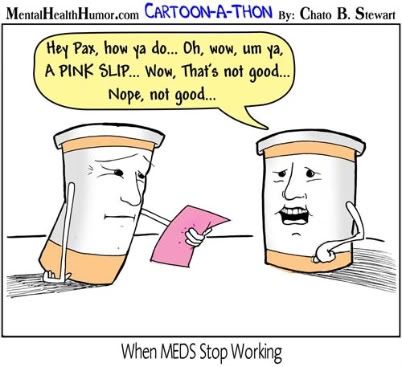
I have a confession…I often refer to myself as “crazy” and that “I have the papers to prove it”. I never realized that this might be adding to the stigma that already exists, my only thought was that it made my daughter laugh.
3. Challenge media stereotypes. Write letters to any newspapers, TV or radio stations that promote negative portrayals of people with mental illness.
This advice is great for someone who has reached a point in their recovery process where they feel they are equipped and capable of doing this. However, at this time, the most I can do to change media stereotypes is to talk about it on my blog. That is a comfortable place for me to tackle difficult issues.
4. Support those with mental health issues. Treat them with respect. Help them find jobs or housing. Encourage them to get or stick with treatment.
Encouraging people is something I can do. When I go to my counseling appointments now, I make a point of speaking with other patients in the waiting area. Many times I make a point of speaking to someone that I would not have spoken to in the past.
5. Share your story. If you or someone in your family has had a mental illness, speak up about it. Your example could help someone else.
I have been sharing my story for months on my blog. It is easy to do there because I can hide behind a computer screen. I am slowly becoming more comfortable sharing my story in person, attaching a face to the story. I can see that it does make a difference.
Steps to Cope with Stigma
There are some things we can do to cope with the stigma that surrounds people with a mental illness.
- Get treatment. Do not let the fear of being “labeled” prevent you from seeking diagnosis and treatment. Diagnosis and treatment can relieve a great deal of stress and tension by identifying what is wrong in concrete terms, and reducing symptoms that interfere with work and your personal life.
- Do not let stigma create self-doubt and shame. One of the best ways to minimize the stigma about mental illness is to come to terms with your illness. Feeling ashamed, embarrassed or humiliated because of something that is beyond your control is very destructive.
- Seek support. Although you might not feel comfortable telling anyone anything about your condition, it is important to do so. If you tell people you trust, you may find compassion, support and acceptance. Stigma can lead to social isolation, making it extremely important to stay in touch with family and friends who understand.
- Don’t equate yourself with your illness. You are not your illness. Instead of saying “I’m bipolar,” say “I have bipolar disorder.” Do not say you “are depressed.” Say you “have depression.”
- Use your resources. In the United States there are federal, state, and nonprofit resources available to you. You may have to look for them. You can get a friend or family member to help you search out the resources you can use.
Even though I am technically disabled, I cannot get disability. The reason is because I chose to be a stay home mother for many years, I do not have enough job credits in the Social Security System. However, I have found help. I have gotten a year’s worth of free medications from the drug manufacturers, by filling out the proper paperwork and submitting it to them. The psychiatric clinic I go to gets government funding, so at this time, based on my husband’s income I do not have to pay for my appointments.
I believe that if we all work together and do what we can, we can erase the stigma that surrounds people with mental illnesses.




 I love having a dog. For me, that unconditional love and acceptance I get from them is irreplaceable. Just petting Minnie’s little head, or having her curl up under the covers with me makes me feel good. I can talk to her and she listens, at least I think she does. She seems to know when I am not feeling well, because she will curl up next to or on me and comfort me.