Why I Talk About Suicide

In the last few months, one of the things I have become passionate about is suicide prevention.  As a result, I have become more vocal about my own suicide attempts and what brought me to the point where I felt that suicide was my only option.  I have come to believe that the more light that is shed on this difficult to discuss subject, the more aware people will be about the growing epidemic of suicide.

I remember how much pain I was in before I tried to take my own life.  It was a physical and mental pain that was more than I could bear.  The thought of how many people are out there who are in that kind of pain hurts my heart.  I want to let them know that they can move past that pain, and make it to a place where they are happier and healthier.  I want them to know that having hope is possible.

Silence keeps the subject of suicide clouded in mystery.  However, many suicide attempt survivors find it difficult to impossible to talk about it.  There is a great deal of shame associated with having attempted to take your own life.  People make judgments about the type of person your are.  There is an awful lot of pressure to ” perform better” in the future. Not everyone who has survived a suicide attempt is emotionally strong enough to break their silence.  They may never be strong enough. However, since I am strong enough, I feel it is my duty and privilege to attempt to educate people about suicide, and suicide prevention.

Each year the amount of people who die by suicide goes up.  My hope is that if enough people take on the challenge of educating others about suicide and suicide prevention we will one day see the suicide rate go down.  It may be an unrealistic hope, but unrealistic does not mean impossible.

If you are interested in joining an online community for people who have survived their suicide attempt, please take some time to look at Suicide Attempt Survivors

Christianity And Depression

Article first published as Christianity and Depression on Blogcritics.

For many people with a Mental Health issue, seeing the words Christianity and Depression together is something akin to an oxymoron.  When paired, those words just do not make much sense to them.  Most of the time, this reaction is caused by experiences with the Christian Community that involved stigma, discrimination, and, misunderstanding. The resulting consequences of these negative experiences is that people with depression often feel they are being judged by the Christian Community. These  judgments can range from being told that there is no such thing as depression, to implying that depression  is simply a lack of faith.

For some, these judgments get in the way of seeking help.  Instead, a choice is made to get rid of the depression without any medical intervention.  Rarely does this work.  Others react by experiencing a crisis of faith, frequently leaving them in a deeper state of depression.

However, there are a number of Christians who acknowledge that depression is  a disease.  Interestingly, this is not a recent development.  It appears that many Puritan Pastors. who were well versed in the Bible, recognized that depression was a complex disease with a multitude of causes.  Puritan Pastor Richard Baxter is known for a sermon on depression he once delivered.  In it he declares that not all depression is caused by sin or a lack of faith, but that in many instances its root cause is physical. (Using the word physical during Puritan times also included the brain.)

With very many there is a great part of the cause in distemper, weakness, and diseasedness of the body; and by it the soul is greatly disabled to any comfortable sense. But the more it ariseth from such natural necessity, the less sinful and less dangerous to the soul; but never the less troublesome, but the more.

Basically what Baxter is saying is that even if the cause of the depression is physical it can affect the soul. Not in a Heaven or Hell sense, but that the soul will be in pain. He is also saying that when the depression is caused by something physical then it has no basis in sin and could possibly cause a person to be in more pain than someone feeling depressed or upset because they committed a sin. At the end of this sermon Baxter also discusses how diet and medicine (most likely meaning herbal remedies) can help someone with depression. More information about Richard Baxter and his sermon about depression (including the quote used in this article), can be found at Puritan Resources for Biblical Counseling.

Christians living in today’s world, who believe that depression is a disease, can and do use the Bible to back up their beliefs. David in the old testament on more than one occasion felt as if he had been immersed in a “pit of destruction” or a “miry bog”. These words are believed to describe David’s spiritual condition/depression.

These Christians believe in the miracle of modern medicine to treat previously untreatable depressive episodes. They also believe that joy can be found in God. In essence, they feel that depression can be treated by a combination of medicine and God’s Word, and that this can be done without judgment or alienation of the person with a depression diagnosis.

There will always be some Christians whose viewpoint about depression is that it is not a disease. However, this does not represent the opinion of all Christians. For those who do believe that depression is a disease, their belief is rooted firmly in what the Bible tells them about depression.

Changes, Changes, Changes

I know that everything must change.  I also know for the most part that change is a good thing.  However, knowing those things does not negate the fear I have when it is time for things to change.  My treatment at the treatment center I go to, is in a state of change right now.  It is creating some stress for me. Actually, I have decided that the stress is good for me.  It is not an overwhelming stress, it is more like the stress is there because I am being pushed a little bit out of my comfort zone.  Just enough that it should effect more growth in that area of my life.

The psychiatrist that I had been seeing since I began going to that treatment center recently left.  The new doctor arrives, September 16th and I have an appointment with him on that day.  I have shared that I am a little nervous about getting to know a new psychiatrist. I think I will be okay with that change once it happens.  It is not like I am going to a totally new place, it is just a new doctor coming in.

I sense a change coming with regards to my counseling.  I know that one of the big goals in therapy is to get to a point where the patient no longer relies on the therapist as much or not at all.  I know this but yet, it does not make me feel any more confident at the thought of not having my counseling sessions as often or at all.  I think it is getting close to that point.  After my awesome counseling session the other day, the counselor asked me if I thought I needed to see her individually anymore this month or only at the group sessions.  I set an appointment to take place in two weeks.  I am glad that my counselor lets me set the pace for my therapy.  I do know that it is time for me to start pushing my comfort zones again. It always happens that way, just when I get comfortable, it is time to take on some new challenges.

Stigma and Mental Illness – Mental Health Awareness

I knew I was experiencing depression. I knew I needed help. I knew I was in serious trouble. However, in spite of knowing those things, I chose not to ask anyone for help. I was too embarrassed, and ashamed.  I thought people would see me as a weak person, and not want to have anything to do with me.  Even when I woke up in the hospital after my suicide attempt, my biggest concern was not that I was alive, or how close to death I had come, it was embarrassment at the fact that people would now know my secret.

Stigma and Mental Illness

Society feels uncomfortable about mental illness.  It is not seen like other illnesses such as heart disease, and diabetes.  Because of  inaccurate information and misunderstanding, people have been led to believe that people with a mental illness are weak, or dangerous.

Due to stigma, the typical reaction someone with a mental illness encounters is fear and rejection.  As a result, many people with this disease lose self-esteem and have difficulty making friends.  The stigma attached to mental illness is so much a part of our thinking that people who suspect they are mentally ill, will not seek help out of fear of what others will think.

Here are some common myths that may be used to justify negative feelings about people with a mental illness.

  • Myth: Mental illness is fairly rare and does not affect average people.
  • Fact: Mental illness is quite common.  According to the American Psychiatric Association, one in five Americans suffer from a mental disorder in any given year.  Mental illness can strike people of any age, race, religion, or income status.
  • Myth: People with mental illnesses are dangerous.
  • Fact: This powerful myth has been fed by the media. In fact, the vast majority of people with mental illnesses are not dangerous. They are much more likely to be the victims of violence and crime than the perpetrators.
  • Myth: Mental illness is more like a weakness than a real illness.
  • Fact: Mental illnesses are as real as other diseases like diabetes or cancer. Some mental illnesses are inherited, just as some physical illnesses are. They are not the result of a weak will or a character flaw.
  • Myth: People with mental illnesses can never be normal.
  • Fact: Science has made great strides in the treatment of mental illness in recent decades. With proper treatment, many people with mental illnesses live normal, productive lives.

There are things we can do to reduce the stigma and make things easier for the millions of people who live with a mental illness.

1. Educate yourself about mental illness. Having the facts can help you challenge the misinformation that leads to stigma.

2. Be aware of words. Don’t reduce people to a diagnosis. Instead of “a schizophrenic,” say “a person with schizophrenia.” Correct people who use hurtful language to describe people with mental illness, such as “psycho” or “crazy.”

I have a confession…I often refer to myself as “crazy” and that “I have the papers to prove it”.  I never realized that this might be adding to the stigma that already exists, my only thought was that it made my daughter laugh.

3. Challenge media stereotypes. Write letters to any newspapers, TV or radio stations that promote negative portrayals of people with mental illness.

This advice is great for someone who has reached a point in their recovery process where they feel they are equipped and capable of doing this.  However, at this time, the most I can do to change media stereotypes is to talk about it on my blog.  That is a comfortable place for me to tackle difficult issues.

4. Support those with mental health issues. Treat them with respect. Help them find jobs or housing. Encourage them to get or stick with treatment.

Encouraging people is something I can do.  When I go to my counseling appointments now, I make  a point of speaking with other patients in the waiting area.  Many times I make a point of speaking to someone that I would not have spoken to in the past.

5. Share your story. If you or someone in your family has had a mental illness, speak up about it. Your example could help someone else.

I have been sharing my story for months on my blog.  It is easy to do there because I can hide behind a computer screen.  I am slowly becoming more comfortable sharing my story in person, attaching a face to the story.  I can see that it does make a difference.

Steps to Cope with Stigma

There are some things we can do to cope with the stigma that surrounds people with a mental illness.

  • Get treatment. Do not let the fear of being “labeled” prevent you from seeking diagnosis and treatment.  Diagnosis and treatment can relieve a great deal of stress and tension by identifying what is wrong in concrete terms, and reducing symptoms that interfere with work and your personal life.
  • Do not let stigma create self-doubt and shame. One of the best ways to minimize the stigma about mental illness is to come to terms with your illness.  Feeling ashamed, embarrassed or humiliated because of something that is beyond your control is very destructive.
  • Seek support. Although you might not feel comfortable telling anyone anything about your condition, it is important to do so.  If you tell people you trust, you may find compassion, support and acceptance. Stigma can lead to social isolation, making it extremely important to stay in touch with family and friends who understand.
  • Don’t equate yourself with your illness. You are not your illness.  Instead of saying “I’m bipolar,” say “I have bipolar disorder.”  Do not say you “are depressed.”  Say you “have depression.”
  • Use your resources. In the United States there are federal, state, and nonprofit resources available to you.  You may have to look for them.  You can get a friend or family member to help you search out the resources you can use.

Even though I am technically disabled, I cannot get disability.  The reason is because I chose to be a stay home mother for many years,  I do not have enough job credits in the Social Security System.  However, I have found help.  I have gotten a year’s worth of free medications from the drug manufacturers, by filling out the proper paperwork and submitting it to them.  The psychiatric clinic I go to gets government funding, so at this time, based on my husband’s income I do not have to pay for my appointments.

I believe that if we all work together and do what we can, we can erase the stigma that surrounds people with mental illnesses.

The Impact Of Physical Illness On Mental Health – Mental Health Awareness

I believe that my physical illnesses contributed to the poor state of mind I had, as well as developing Clinical Depression, and an Anxiety Disorder. I went from being a relatively healthy person to someone who physically feels rotten much of the time. Also, several of the medications I am on to treat the diabetes and the asthma have been shown to directly affect your brain and lead to depression, especially, if you are already prone to depression or anxiety.  My counselor calls it co-morbidity.

I believe I have a better attitude and outlook about my physical illnesses. When I was in the hospital for my asthma in February,  I was not down in the dumps like I would have been before. Being there on my fortieth birthday did not bother me. I even kept blogging while I was there. I would have the nebulizer in my mouth, for a breathing treatment, and I would be blogging away at the same time. I also think my depression medications help counter how my other medications might affect my brain chemistry.

The Impact of Physical Illness on Mental Health


There is one particular aspect of  mental health that is still not widely discussed.  It is the impact that physical illness has on a person’s mental health.  Mental health workers easily recognize this fact, everyday they see patients with a multitude of physical and mental issues.  Unfortunately, few outside the mental health field see the correlation.

One way to put it in perspective is to think about how you feel when you have a cold.  Obviously, you have a stuffy nose, runny eyes, a fever, and you just feel physically awful.  How about the mental aspect of it?  Many people get cranky, and a bit irritable.   Very often it goes deeper than that.  Many people feel “blue” or “down in the dumps” when they have a cold.  I know I get really whiny when I have a cold.  The good thing is we know that a cold is not going to last very long, most of the time, and soon we will be back to feeling like ourselves.

Now think about this, what if the cold turned into a long term illness?  How do you think that would affect your mental health?  Most people, no matter how mild or serious the illness is, experience a wide range of emotions.  Emotions like anger, sadness, and worry.  We feel like we have no control and that our bodies have let us down.  We feel lonely, and even though there probably have been millions of other people with the same illness, we feel as if no one really understands what we are going through.

From a mental health perspective, when it comes to a chronic or long-term illness, anxiety and depression are the biggest concerns.  Many times these mental health issues  are  over-looked and left untreated.  Which can be very dangerous from both a mental health perspective, it can lead to suicide, and from a physical health perspective, it can delay healing.

Doctors are becoming more aware of how physical illnesses can affect mental health and attempt to be on the look out for the signs and symptoms of anxiety and depression.  However, their best source of information about how you are doing mentally, is from you.  Your doctor will not be aware that you are having any mental health issues if you are not open and honest with them about what is going on in your life and how you are feeling.

Why are depression and anxiety more likely to happen when you have a physical illness?

  • People become depressed and anxious when they are stressed for any reason.  Being ill is stressful.
  • Some drug treatments, such as steroids, affect the way the brain works and can directly cause anxiety and depression.
  • Some physical illness, such as an under-active thyroid, affect the way the brain works and can directly cause anxiety and depression.

You are more likely to experience severe anxiety and depression when you are physically ill if:

  • You have been anxious or depressed before.
  • You do not have family or friends you can talk to about your illness.
  • You are female (women report more anxiety and depression than men).
  • You have other problems or stresses going on in your life at the same time.
  • You are in a lot of pain.
  • Your illness is life threatening.
  • Your illness has left you incapable of taking care of yourself.

Clinical Depression – Mental Health Awareness

I was diagnosed last year with Clinical Depression. My diagnosis came after several years of suffering, and a suicide attempt. When I compare how I feel now to how I felt this time last year, I am amazed at the difference. Even my soul feels refreshed.
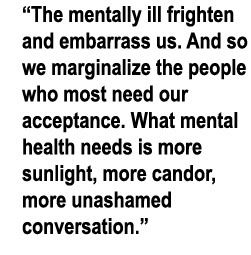
I will always have Clinical Depression, however, my goal is to never allow myself to get that sick with it again. Everyday, I look for any signs that my medications might not be working. I have family members whose job is to watch and see if I exhibit any signs of a set back. I have plans in place in case my medications ever stop working, and I need some extra help for a time. I believe all of these are productive steps in my plan to stay as healthy as I can.

Clinical Depression


Depression affects more people than any other mental illness, more than about 19 million Americans each year.

Clinical Depression is more than just being down in the dumps, or feeling blue.  It is a real illness, and it can be treated.  Unfortunately, most people who have depression do not seek help.

Many people are intimidated by the stigma that surrounds depression or other mental health issues, and as a result do not want to let anyone know they need help.  Others believe depression is just a normal part of  life’s ups and downs, and do not realize that it is a real illness, causing them to delay seeking help, or to never seek it at all.   It is important for people to know that depression is a real illness, and there are many effective treatments for it.

Some signs of depression are:


  • A persistent feeling of sadness, anxiety, or an empty feeling
  • Difficulty falling asleep, staying asleep, or sleeping too much
  • Reduced appetite and weight loss or increased appetite and weight gain
  • Loss of interest and pleasure in once enjoyable activities
  • Restlessness, or irritability
  • Difficulty in concentrating, difficulty in remembering things, or difficulty making decisions
  • Fatigue or loss of energy
  • Feeling guilty, hopeless or worthless
  • Thoughts of suicide or death

If you have been experiencing five or more of these symptoms for two weeks or longer, there is a possibility that you may have depression.  Seek professional help immediately.

If you are a family member is in crisis right now call 1-800-273-TALK or dial 911

Dangerous, Crazy, Disabled

There is a certain stigma that usually surrounds people with mental illnesses. Dangerous, crazy, violent, stupid, disabled, weak, are the usual judgments that are made about the mentally ill because of this stigma. These negative labels often keep people from seeking help for a mental illness. They fear that friends, family and strangers will treat them with disdain and disrespect.

As much as I hate to admit it, I was one of those people who held a negative stereotypical image of the mentally ill. I was quick to make judgments and in my mind (and possibly outwardly) I had less respect for the mentally ill, than so called normal people. I did not believe that the mentally ill were really capable of being productive members of society and I had it in my head that most if not all were violent. I was very harsh in my judgments.

I could say that I had those harsh judgments because of how the mentally ill are portrayed in the movies, or on TV. I could blame it on the fact that when there are news reports about the mentally ill, it seems that the news media picks the worst cases to talk about. I could even defend myself with the fact that my ideas came from outdated opinions about the mentally ill that seem to still persist in our society.

The truth is that I had a choice, I could have taken the time to learn more about mental illness and the people affected by it. I never did. I never believed that anyone in my family could be affected by a mental illness, much less me. Then I came up close and personal with mental illness, and I was the one who had it.

Even when I was in very real trouble with my depression and knew it, my harsh judgments were still there. My own judgments got in the way of me seeking help before things came to head with my suicide attempt. I knew that if I thought that way about people with mental illnesses, my family would as well. I kept quiet, and I became more ill.

Once I started receiving help for my mental illness, I realized how wrong my judgments were. I also realized what my judgments (and how they kept me from seeking help) almost cost me…..my life. At the very least, since I refused to seek help for so long, my judgments allowed my mental illness to become worse.

Obviously through my treatments and my hospitalization I was exposed to many people with mental illnesses. I was surprised at how many of them seemed so “normal” to me. They were intelligent, well spoken people, and most were doing well with their recovery programs. They were certainly not weak people because they were working hard to manage their mental illnesses, even if the mental illness was still giving them difficulty. For the most part, the mentally ill people I was exposed to were much more generous and giving than many “normal” people I have met. Probably much more generous and giving than I might have been before my own diagnosis. As far as the mentally ill people I encountered being violent, there was only a very minute portion that were.

If things had been fair, I would have been treated to the same harsh judgments that I had about the mentally ill before my diagnosis. Things were not fair and I have been shown much kindness by the majority of the people who have had a hand in my recovery process.

I have learned a great many truths in this past year since I began my recovery process. I have learned that I have been a very judgmental person. Being such a judgmental person has caused myself and other people un-necessary pain. I have learned to let go of my judgments and take people as they are. I have come to realize that people with mental illnesses are as wide and varied as “normal” people are and that I should never, ever judge a person by their label.

Is there anything you have been judgmental about, only to find yourself in the same position later?

Can you think of a time when your judgments or someone else’s judgments may have cause harm (emotional, physical) to someone?