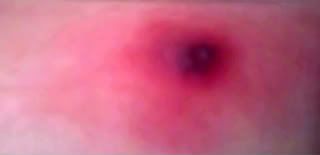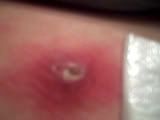
My infection continues to improve. I am very thankful for that. I did receive news today that it is definitely a MRSA infection. Which makes me even more thankful that it is responding to the antibiotics I was given. I am experiencing little to no pain now, however, the darn thing is very irritating. Itching constantly!! Between the bandages and the wound itself that part of my body is one giant itch. I keep telling myself that means it is getting better. I hope that is true.
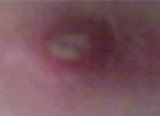
When I went to have a doctor to look at my infection, the swelling was about three inches in diameter. Now the swelling is about the size of a nickel. Here is what it looks like now.
Since I have had this infection, several people have asked me what is MRSA, so I thought I would take some time and share what I have learned about it.
- MRSA is short for methicillin-resistant staphylococcus aureus.
- MRSA is nothing more than a staphylococcus aureus (staph) infection, however, it can cause huge problems because it is so resistant to many antibiotics.
- MRSA infections are primarily spread in a hospital environment.
- MRSA infections, just like any other staph infection, are extremely contagious.
- The bacteria that make up staph are found on everyone’s skin and in their noses.
- MRSA developed mostly because of the following reasons, 1 overuse of antibiotics, 2 people not taking all of their antibiotics and 3 bacterial genetic change.
- MRSA is NOT a virus, it is a bacterium.
- MRSA was first discovered in 1961.
- A weakened immune system puts you at more risk for developing a MRSA infection. Illnesses such as diabetes, cancer, HIV …
- If you have been hospitalized and needed an IV, a catheter, dialysis, or anything else that can be considered even mildly invasive could put you at a higher risk for MRSA.